

'Los Angeles' is one of the earliest examples of a California bungalow to be built in New Zealand, and was constructed sometime between 1909 and 1913. There are two traditions associated with the house. The first is that it was brought out from California in kitset form by the owner, Captain James McDonald, who was a trader between New Zealand and the United States. The second states that McDonald imported the weatherboards and cedar shingles he needed for the house from the States. Certainly shipments of exotic timbers were arriving in New Zealand by the beginning of the twentieth century, and American cedar in particular arrived in both baulks of timber and as sawn shingles. However, drawings by the architect J.S. Guthrie from 1909 indicate that the house was designed in New Zealand, but perhaps based on plans and drawings brought over from California.
The typical features of the Californian bungalow seen here include the stone verandah post, the deep porch, the wide eaves, the horizontal lines of the building, the window hoods, the exposed rafters on the gables, and the dark exterior. Inside the house the halls, living room and breakfast room are panelled in rimu with a 'plate shelf' running around them. The ceilings feature exposed rafters.
Canterbury river stones were used for the verandah pillars, the chimneys, and the roadside fences, which are also included as part of the New Zealand Historic Places Trust/Pouhere Taonga registration. (The fence was moved and rebuilt due to road widening in 1992).
'Los Angeles' is highly significant as the earliest distinct example of a Californian bungalow in New Zealand. The advent of the bungalow is associated world wide with a more relaxed lifestyle, a growth in suburban living and ideas of 'town planning' and 'garden cities'. These changes are allied with a growth in private motor cars and public transport, making it easier for people to live away from the central city. In New Zealand the bungalow became the typical building of the suburbs and the construction of 'Los Angeles' is important as early evidence of the architectural expression of this developing trend.
The typical features of the Californian bungalow seen here include the stone verandah post, the deep porch, the wide eaves, the horizontal lines of the building, the window hoods, the exposed rafters on the gables, and the dark exterior. Inside the house the halls, living room and breakfast room are panelled in rimu with a 'plate shelf' running around them. The ceilings feature exposed rafters.
Canterbury river stones were used for the verandah pillars, the chimneys, and the roadside fences, which are also included as part of the New Zealand Historic Places Trust/Pouhere Taonga registration. (The fence was moved and rebuilt due to road widening in 1992).
'Los Angeles' is highly significant as the earliest distinct example of a Californian bungalow in New Zealand. The advent of the bungalow is associated world wide with a more relaxed lifestyle, a growth in suburban living and ideas of 'town planning' and 'garden cities'. These changes are allied with a growth in private motor cars and public transport, making it easier for people to live away from the central city. In New Zealand the bungalow became the typical building of the suburbs and the construction of 'Los Angeles' is important as early evidence of the architectural expression of this developing trend.
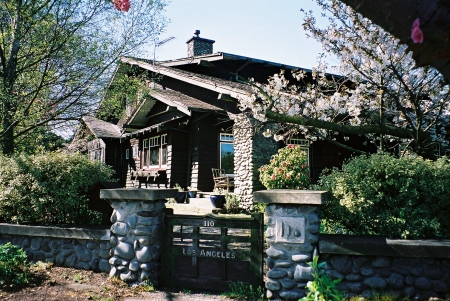
Los Angeles | Melanie Lovell-Smith | 01/09/2001 | Heritage New Zealand Pouhere Taonga
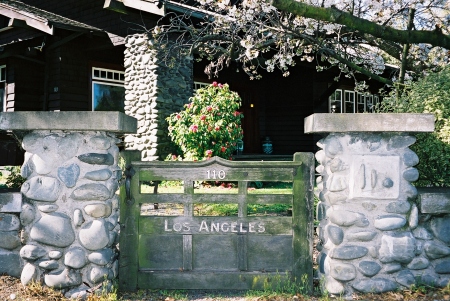
null | Melanie Lovell-Smith | 01/09/2001 | Heritage New Zealand Pouhere Taonga
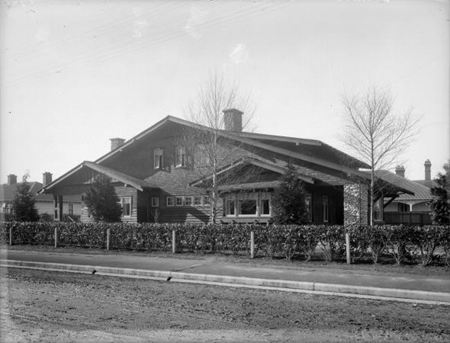
'American arts and crafts style bungalow in Fendalton, Christchurch'. Permission of the Alexander Turnbull Library, National Library of New Zealand Te Puna Matauranga o Aotearoa, must be obtained before any re-use of this image. Ref no. 1/1-021835 | Steffano Webb (1880?-1967). Photo taken c.1913. | Alexander Turnbull Library
Los Angeles | Melanie Lovell-Smith | 01/09/2001 | Heritage New Zealand Pouhere Taonga
null | Melanie Lovell-Smith | 01/09/2001 | Heritage New Zealand Pouhere Taonga
'American arts and crafts style bungalow in Fendalton, Christchurch'. Permission of the Alexander Turnbull Library, National Library of New Zealand Te Puna Matauranga o Aotearoa, must be obtained before any re-use of this image. Ref no. 1/1-021835 | Steffano Webb (1880?-1967). Photo taken c.1913. | Alexander Turnbull Library
